

From the popular forest bathing in the 1980s in Japan to the growing body of research that says 2 hours a week in the wilderness - simply being outside - can improve your mental health, and now, in Scotland, General Practitioners regularly prescribe walks in the woods for their patients. Enter Wilderness Therapy and the Outdoor Behavioral Healthcare Council. Outdoor Behavioral Healthcare has begun outcomes-based research. Wilderness Therapy programs have been influenced directly or indirectly by Kurt Hahn’s Outward Bound program. According to Dr. Will White, author of Stories from the Field: A History of Wilderness Therapy, shared that, “Outward Bound arrived in the United States in 1962 and many of the early Outward Bound instructors and students went on to start wilderness therapy programs in the late 60’s, 70’s and 80’s.” There are many different models of wilderness therapy, and White explained, "One of those instructors included the originator of the primitive skills model of wilderness therapy, Larry Dean Olsen, who was inspired by his summer working at Outward Bound in Colorado. He took what he learned at Outward Bound and added primitive skills to help struggling students at Brigham Young University in 1968. This would spark the movement of wilderness therapy programs in the West. Most wilderness therapy programs still include elements first seen at Outward Bound, such as solos (time alone in the wilderness) and an endurance challenge. It has had a tremendous influence on wilderness therapy. The Outward Bound Intercept program was specifically designed for struggling teens. Although Wilderness Therapy programs have similar roots to Outward Bound, they have evolved into very different models, with one foundational distinction being the presence of licensed clinicians on each treatment team, state regulation for struggling teens (if offered), and most programs are nationally accredited by the Association for Experiential Education. Wilderness therapy programs work with the whole family system from enrollment through discharge. The goal of this blog is to point out the 6 key areas of difference between the two populations of “troubled teens*” or young adults who are struggling.
This blog was first published on June 1, 2020. The wilderness therapy landscape has changed significantly. A number of programs have closed their doors entirely, while those that remain have largely deepened and expanded how they work with families — moving well beyond the model described above. The family involvement practices outlined here represent what reputable programs are doing today, and the bar has been raised considerably across the field.
If you are currently researching options, take a moment to visit the partners on All Kinds of Therapy who work specifically with Pre-Teens, Teens, or Young Adults in a wilderness therapy setting. When you speak with any program, ask pointed questions about how they work with your family, not just your child. If a wilderness program has not evolved substantially in its engagement of the entire family system, that is important information. The most reputable programs today treat family involvement as non-negotiable, not optional. They are accredited by different nationally accrediting bodies. If a program you are contacting cannot clearly articulate what you will be doing while your child is enrolled, that is a signal worth taking seriously.
Voyageur Outward Bound has evolved, too, as you will read below. They have also partnered with extended care and home-based support services after the course ends, a departure from the earlier "fieldwork is our specialty, follow-up is outside our expertise" position.
1. The Client: Struggling Teen | Young Adult
- Wilderness Therapy programs (sometimes referred to as adventure therapy) are accredited by state and/or national organizations and enroll students who may be struggling with a particular diagnosis (or diagnoses), may be acting out behaviorally, and have not found success at home, at school, and/or with friends. Wilderness Therapy programs are rarely the first intervention in a teen or young adult's life. The child may have been to outpatient, family, or group therapy, struggled in school, been hospitalized, attended a partial hospitalization program (PHP) or Intensive Outpatient Program (IOP) expelled from school, arrested, or is struggling or failing in school or is a puzzle in terms of the clinical piece or behavior. Wilderness Therapy for a teen or young adult might be an assessment/stabilization/treatment step. Several Wilderness Therapy programs offer specialized groups for a specific diagnosis (neurodivergent/autism spectrum disorder (ASD) or substance/recovery.
- The Outward Bound Intercept program students have a level of insight, and it is the students' choice to enroll.
2. Enrollment | Length of Stay
Wilderness Therapy accepts new students on a rolling admissions basis, and the length of stay varies up to 3 months. They have an extensive application that includes a psychosocial assessment. The enrollment fee to a wilderness therapy program pays for all the outdoor gear that is required for the treatment program. Families do not have to shop for gear for their child; this allows a client to enroll in an emergency. Some wilderness therapy programs will allow a client to enroll with a teen transport; others will focus on assisted transport, and yet many clients enroll willingly. The Outward Bound Intercept programming 23-day confidence-building adventure, and expeditions now range from 20 to 50 days, depending on the school.
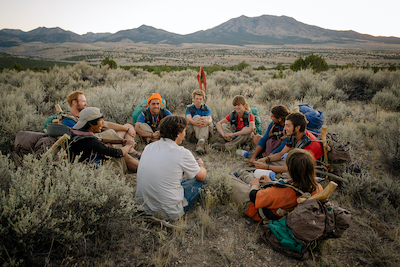
3. Staffing
- Wilderness therapy programs hire college graduates who undergo 40-plus hours of training before going out with students in the field, with ongoing training. The titles of the staff vary from wilderness program to wilderness program, but the intense training requirements weed out those who are not capable in outdoor survival and adventure skills ("hard skills") and in emotional intelligence/communication (and sometimes de-escalation). Field staff is a vital component of a teen’s treatment at a wilderness therapy program. Field staff shifts vary, from 8 days on and 6 days off to 15 days on and 13 days off. All of the wilderness therapy programs start pay at $120+/day. After a certain period, there are healthcare benefits and more. Therapeutic staff develop soft skills and expedition leadership skills; their job includes serving as an extension of the clinical team, assessing and intervening with their assigned “caseload” of students.
- Outward Bound staff do help participants recognize and modify their behaviors, but almost entirely in relation to a group-orientation, and group goals. Staff training is something to discuss with OB.
3. Clinical Goals
- Wilderness Therapy Nationally accredited and/or state-accredited wilderness therapy programs have licensed masters or Ph.D. level clinicians creating and supervising the treatment plan for the student. In simple terms, the goals for the struggling teen or young adult treatment and strategies to achieve them are in this document, and it is updated consistently during enrollment in the program. A licensed therapist will do individual and group therapy sessions during their field time. Each Wilderness therapy program has a different schedule for the day(s) the therapist is in the group. Another regular aspect of the course includes groups and individualized counseling by the field instructors/staff, who are a critical part of the treatment team.
- Outward Bound Intercept does not have treatment plans or clinical oversight during the student’s enrollment. Struggling Teens who enroll in the Outward Bound program are not there to receive individual treatment; instead, all of their therapeutic experience is from group processing that is not run by a clinician.
4. Clinical Assessment vs. Experiential Education
- Wilderness Therapy programs have deep-rooted clinical underpinnings, where the goal, according to Outdoor Behavioral Healthcare accreditation, is “ the prescriptive use of wilderness experiences by licensed mental health professionals to meet the therapeutic needs of clients’ The nuance of how a particular company implements this is part of the nuance of how they differ. There are different wilderness therapy models that focus on stabilization, assessment and varying types of treatment. Wilderness Therapy programs use small group dynamics, backcountry simplified living, community interaction and intensive observation and psychotherapy to engage clients in healthier interdependence.
- Outward Bound launched its first school in Aberdovey, Wales, in 1941, founded by Lawrence Holt, based on the educational principles of Kurt Hahn. While individuals develop self-efficacy and initiative, the focus is not on individual “issues” or personal triumphs.
5. Family
- Wilderness Therapy programs work with families before their teen or young adult’s enrollment and during their enrollment. Generally, it begins with admissions helping the family detach from unhealthy excuses or codependency, and, in treatment, becomes letter writing, weekly phone calls with the clinician to update on the assessment and treatment goals, and possibly phone and field visits or a workshop dedicated to that family during their teen's enrollment. Many Wilderness therapy programs have a parallel process of treatment or coursework that families must go through, a family workshop during or at the end of a teen or young adult's programming, or a dedicated clinician for that family, or a parent coach. One piece that has changed with Wilderness Therapy since its inception ~ the entire family has therapeutic work while the child, teen, or young adult is enrolled.
- Outward Bound reveals on its website that it serves families and students who are ready or open to change. Before enrolling, the application process includes a parent-teen agreement that ensures everyone involved is committed to the decisions, outcomes, support, and accountability that come with the expedition. While their teen is on course, parents receive a workbook presenting opportunities to reflect on where the family has been and where they'd like to go, outlining some of the core lessons instructors are teaching on the trail. The programming culminates in a Family Seminar that reunites teens and families to integrate learning for change, including support from facilitators (not licensed clinicians). Teens and families collaborate to share experiences, identify key learnings, and create a custom family plan for mutual support. They have also partnered with parent coaches to assist with family work after the student completes the course.
Wilderness Therapy (Adventure Therapy) ~ aka Outdoor Behavioral Healthcare and Voyager Outward Bound have changed and are changing. What has fundamentally shifted in wilderness therapy since its early days is the expectation that parents are in treatment too. Reputable programs are no longer in the business of accepting a "drop off and fix" arrangement — the most respected programs today are explicit that handing a child over to a program and waiting for results is not how lasting change works. Instead, the student's enrollment is an invitation — and an expectation — that the whole family system does the work simultaneously.
While their teen or young adult is in the field working on assessment/stabilization, and developing new skills, parents are building new tools of their own: better communication patterns, a clearer understanding of their role in the family dynamic, and the skills to sustain the changes their child is making. The goal is that when a student comes home, they're not returning to the same environment that contributed to the crisis, and that teens/young adults return to a family that has been changing alongside them.
This shift in philosophy has also given rise to post-treatment supports for both parents and young people. Whether a student is transitioning to the next level of care, such as a residential program, therapeutic boarding school, transitional living, or a small boarding school, or returning directly home, reputable wilderness programs always include aftercare planning, alumni resources, and ongoing parent coaching referrals to bridge the transition. The work does not end at discharge; it carries forward so that the momentum built in the field has the best possible chance of taking root in everyday life.
~ Enjoy these blogs in your search to gather information ~
-
Questions for Parents of Pre-Teens/Teens to ask Wilderness Therapy programs?
-
10 Clarifying Questions to Ask Wilderness Therapy Programs if Your Troubled Teen Has Learning Disabilities - Guest blog ~ by Stanford Shapiro, Ph.D
-
For your Young Adult, who is contemplating wilderness therapy: 18+ Wilderness Therapy Applicants? Ask these 28 Questions
*Troubled Teens - is a phrase that people search for, and does not speak to the clinical needs of the young person or the family system.